Google is our webmaster’s preferred search web search site. For better results, click on the the gear icon when searching and check the following settings… : SafeSearch : … learn more
Free Pre-K-12 lesson plans, activities, and resources
Google is our webmaster’s preferred search web search site. For better results, click on the the gear icon when searching and check the following settings… : SafeSearch : … learn more

DuckDuckGo does not track or store anything about your searches. They do not profile users and show all users the same search results for a given search term. … learn more

Google groups is a great resource for crowd-sourced answers. No matter what the topic, there’s an answer – and group – out there. Want to quickly start a … learn more
Use the word bareback and the phrase castro clone to test how well a safe search filter is working. These are the terms we use when evaluating the … learn more
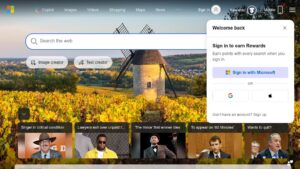
Bing also offers a safe search option. You can implement it using these directions.
When you change safe search settings, the search site will add a “cookie” to your browser with the new setting. This means you’ll need to change the settings … learn more

PBS is another example of a wide-ranging content site that’s safe for students to search. Public Broadcasting Service (PBS) and its predecessor, National Educational Television (NET), have been … learn more

Another safe avenue for allowing students to do their own searches of discovery is to search one of the larger wide ranging content sites, like The Smithsonian Institution. … learn more
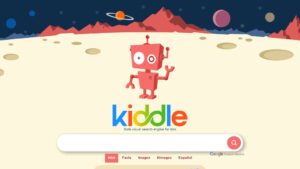
Similar to KidzSearch, with keyword and site blocking, the site is appropriate and formatted for younger students.

KidzSearch combines Google safe search with a constantly updated list of blocked keywords and site names to provide safe search results for students. (Not recommended for the youngest … learn more
Here are some search tips to use when looking for information: If you are searching for a phrase, enclose it with quotes, e.g., “grass for football fields”. Try … learn more
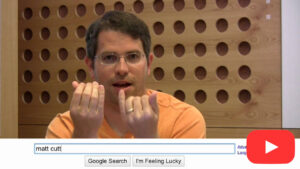
Matt Cutts, a software engineer at Google, provides tips for better web searching.
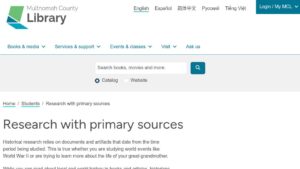
The Multnomah Library Homework Center provides a list of primary sources for a wide range of subjects and topics. Historical research relies on documents and artifacts that date … learn more
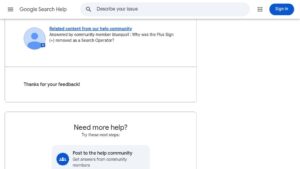
You can use search operators and other punctuation to get more specific search results. A fast way to focus your results with just a few keystrokes.

Here’s another web page to spring on students. Makes a fun and engaging introduction to the topic of information evaluation.

Snopes is a well-regarded reference for sorting out myths and rumors on the Internet. It is a great source for identifying and debunking urban legends and similar stories … learn more
Anyone with an idea and internet access can create a website and fill it with just about any content they want. As of 2018, there are over 1.8 … learn more

The U.C. Berkeley Library has developed a methodology for evaluating the quality of resources and evaluate their authority and appropriateness for your project. Useful for both students and … learn more

S.O.S. for Information Literacyis a dynamic web-based multimedia resource that includes peer-reviewed lesson plans, handouts, presentations, videos and other resources to enhance the teaching of information literacy (K-16).

Dihydrogen Monoxide is one of the most dangerous chemicals in existence. It causes death and severe tissue damage, is a major component of acid rain, causes severe burns, … learn more

You don’t have to be a science news junkie to find yourself constantly confronted with scientific facts and factoids. The truth is slippery, and it’s not always graspable … learn more
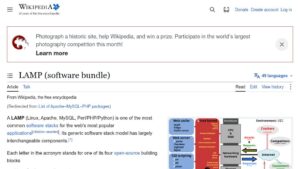
If you are looking for an alternative to WampServer or want to use a different operating system, this up-to-date list can guide you.
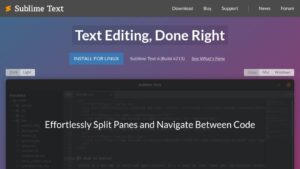
Editing PHP files can be done with any text editing program, like Windows’ built in NotePad editor or one of a number of free, open-source options. Our webmaster … learn more
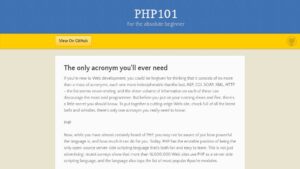
Another good starting point for learning PHP is this entertaining tutorial series written in part by Vikram Vaswani.

W3Schools has a good introduction to PHP, as well as other web technologies like HTML, CSS (Cascading Style Sheets) and XML.
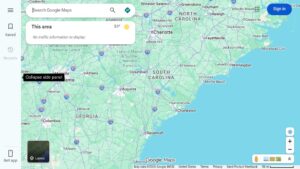
Google Maps includes satellite zooming in and out as part of its map service. Your younger students will get a kick out of finding their home and school. … learn more
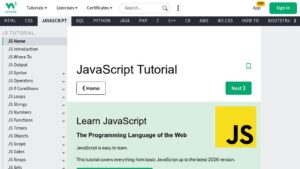
W3Schools’ tutorial starts with a simple Display Date button and goes thru the language step-by-step. The built in Try It Yourself buttons allow you to see and modify … learn more

This video teaches some basic programming concepts using JavaScript. It introduces programming using RoboBob (worth watching just for that) and goes on to show how you can start … learn more
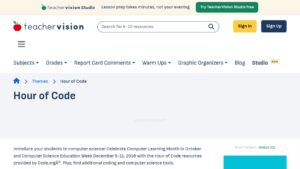
Here is an index to Code.org resources broken out by age range, plus links to additional videos and resources.

Find the right learning opportunity for you, Explore the world of computer science with engaging videos, self-paced tutorials, programming activities, and more for all ages and experience levels!
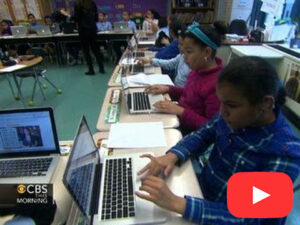
This news report by CBS News includes an overview of what happens in the classroom and how kids are engaged.

Code.org, sponsor of CSEdWeek, is a non-profit dedicated to expanding access to computer science, and increasing participation by women and underrepresented students of color. Their vision is that … learn more

Here’s an overview of what Code.org can offer, why it’s important, and how it works.

This web site allows you to create fully functional applications for Android cell phones. It uses a variant of Scratch, the drag and drop programming language. While App … learn more
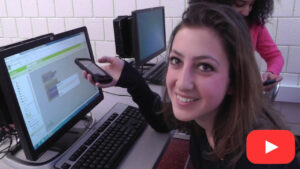
This video introduces MIT App Inventor, which allows anyone to create Android apps using just your cell phone or tablet and a web browser using a variant of … learn more

Alice is an innovative block-based programming environment that makes it easy to create animations, build interactive narratives, or program simple games in 3D. Unlike many of the puzzle-based … learn more
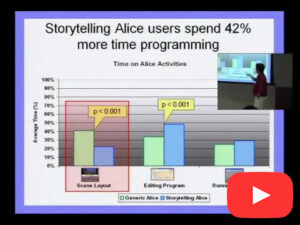
Wanda Dann, Dennis Cosgrove and Caitlin Kelleher go into detail on the new version of Alice (3.0) and why you might want to use it in the classroom … learn more
Kodu lets kids create games on a PC and Xbox via a simple visual programming language. Kodu can be used to teach creativity, problem solving, storytelling, as well … learn more
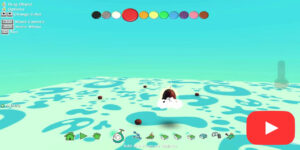
This video shows you how to crate a basic game using Kodu. By layering on simple commands, you can create complex games.
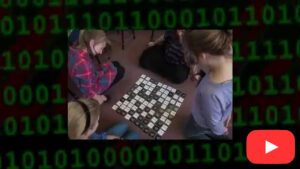
Here’s an overview of the CS Unplugged project, where you learn about computer concepts without touching a computer.
CS Unplugged is a collection of free learning activities that teach Computer Science through engaging games and puzzles that use cards, string, crayons and lots of running around. … learn more

Michelle has created a free, printable “Coding a LEGO Maze” activity that can grow with kids. No computers are used. Just paper and (optionally) a maze made of … learn more

Scratch for Educators. Students can use Scratch to code their own interactive stories, animations, and games. In the process, they learn to think creatively, reason systematically, and work … learn more

Scratch is an educational programming language and multimedia authoring tool developed by MIT. It can be used by pupils, teachers, and parents for a wide range of educational … learn more
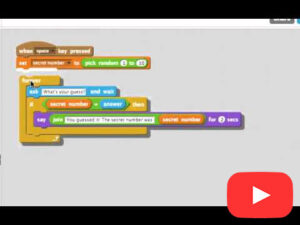
Colleen Lewis has an extensive collection of YouTube videos on Scratch. This one shows how to get started with a simple guessing game. You can see how students … learn more
A video introduction produced by Paula Aguilera and the Scratch Team at the MIT Media Lab.
Here is a fun site for younger children from the BBC. Takes them from the home row thru more advanced skills. Includes worksheets you can print out (make … learn more
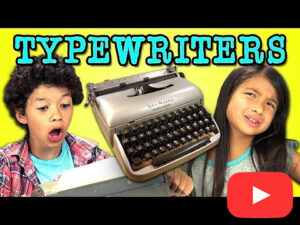
What happens when you show kids 6 to 13 a typewriter. No, it’s not a computer that prints while you type.

Fact Check has received many awards as a neutral and non-profit group. Located within the Annenberg Center at the University of Pennsylvania, it assesses the accuracy of U.S. … learn more
Supporting weather and climate learning, The UCAR Center for Science Education provides online educational resources and professional development opportunities for educators. How does a cloud form? What’s a … learn more
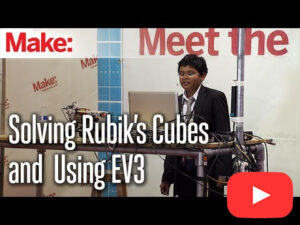
Saurabh Narain is 12 years old, in 7th grade, and created a robot out of Legos and a microchip controller that can solve any Rubik’s Cube in about … learn more

ChemTeam, a site created for high school students, includes tutorials and worksheets (e.g., atomic structure) and, almost best of all, humor and history.
The article in EDUTOPIA describes choreographical designs for understanding concepts in chemistry like valence.

The Science History Institute has created role-playing games designed to enhance the classroom experience for high school chemistry students and teachers. The games can also be implemented in … learn more
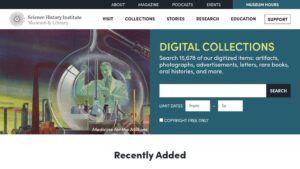
The Science History Institute has a great resource site with everything from artifacts, photographs, advertisements, letters, rare books, oral histories, and more. Check out the section on Alchemy.
What Stuff offers the chemical composition of lipstick, tanning potions,cheese whiz, baseballs, chocolate–all intended to motivate students.
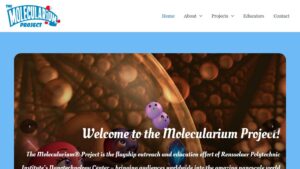
The Molecularium Project has created a number of ground breaking projects to encourage exploration and understanding of the molecular nature of the world around them. NanoSpace is a … learn more

The American Chemical Society provides a wide range of resources for educators and students, including Adventures in Chemistry for younger students, and a club, magazine & Olympiad for … learn more
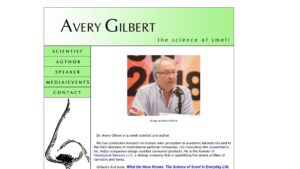
The challenge is to design a distinctive, carefully considered smell or fragrance.
Like most high school chemistry teachers, you have probably inherited someone else’s laboratory and prep room – and be promptly overwhelmed. What does that label say? Should I … learn more
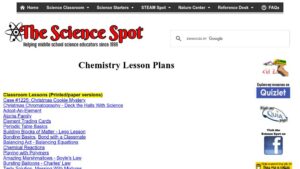
An index of lesson plans, including many for younger students. Topics include: The Atoms Family (see the video on this page), the Christmas Cookie Mystery, Element Trading Cards, … learn more

The Atoms Family is a song about atoms based on the Adams Family theme song. It’s a fun way to focus younger student’s interest. You can find different … learn more
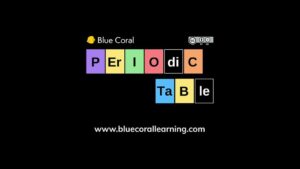
An interactive guide to all 118 elements – and designed to work on all sizes of screens from desktops to phones. Swipe and tap your way across the … learn more
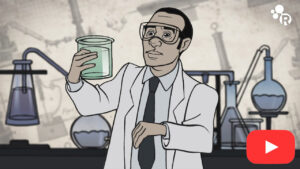
Throughout the history of science, many major discoveries came accidentally. Sometimes they came from recognizing potential in an unexpected product or waste. Other times, discovery came out of … learn more
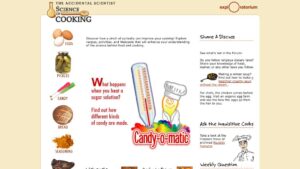
Cooking is a true experience in chemistry. One of the many resources from the Exploratorium in San Francisco.

University of Wisconsin-Madison Chemistry Professor Bassam Z. Shakhashiri shares the joy of science through home science activities, public presentations, scholarship, and other programs of the Wisconsin Initiative for … learn more
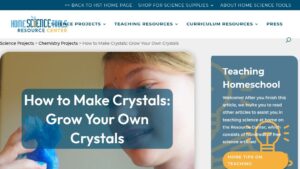
This resource looks at what are crystals and how do they form? A crystal is a solid material with atoms and molecules that are arranged in a consistent … learn more
Using a family’s genetic test for Huntington’s disease as a springboard, this post from the Markkula Center for Applied Ethics at Santa Clara University, looks at the choices … learn more
Evolution is essential to our curriculum and to scientific literacy. To understand the big picture of biology, students need to understand life in terms of both its history … learn more
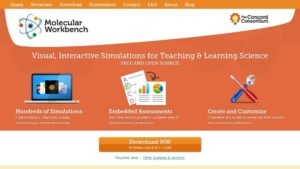
For a deeper understanding and manipulation of mutations Look at the Molecular Workbench, developed at the Concord Consortium.
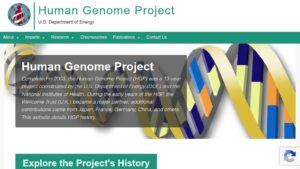
Completed in 2003, the Human Genome Project (HGP) was a 13-year project coordinated by the U.S. Department of Energy (DOE) and the National Institutes of Health. The Publications … learn more
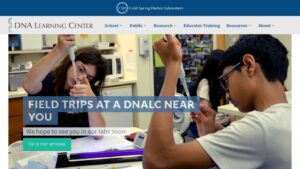
The DNA Learning Center provides educator workshops, student research partnerships, and an index of educational, media-rich web sites.
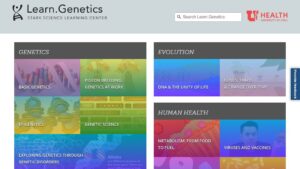
The Genetic Science Learning Center is a wonderful site for anything genetic and includes topics like “How to extract DNA from anything living” (using detergent, meat tenderizer, and … learn more

Years before they conquered the Internet, cats colonized our sofas. This video summarizes the same study featured in How Cats Conquered the World. The researchers analyzed DNA from … learn more
This website, produced by scientists at the Wellcome Genome Campus near Cambridge in the UK, contains videos and activities describing genetics and genomics. Suitable for older students, this … learn more
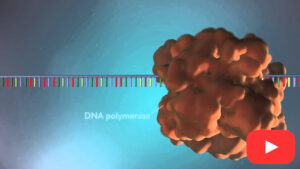
This animation, part of the YourGenome site, shows the many steps and enzymes needed to make a copy of DNA in a cell. It shows how both strands … learn more
Scientific American has this well written recipe for extracting DNA from a strawberry using things you’d find in just about any kitchen. The post includes step-by-step instructions and … learn more

Celebrate Darwin’s birthday by adapting resources at Darwin Day. The site emphasizes verifiable scientific knowledge.
“Operation RubyThroat: The Hummingbird Project” is a cross-disciplinary international initiative in which people collaborate to study behavior and distribution of the Ruby-throated Hummingbird (Archilochus colubris). Although K-12 teachers … learn more
Gav and Dan, the Slow Mo Guys, go to a bird sanctuary to film birds big and small in slow motion. See how an eagle blinks or a … learn more
At least one entire class of dinosaurs seems to have had feathers — including velociraptors, and maybe even T. rex. Find out how we know, and how we … learn more

Humans have invented a variety of instruments to monitor the health of ecosystems. However, in some cases we can examine change in the habitat without instruments by studying … learn more
Centre of the Cell is a science education center hosted by Queen Mary University of London. It is the first science education center in the world to be … learn more
The University of Arizona has also developed a site that illustrates evolution thoroughly and engagingly, Becoming Human. Becoming Human–the title of this site pretty much tells the story! … learn more
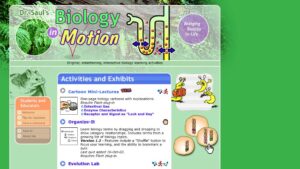
Biology in Motion,developed by an inspiring teacher, uses the Web’s animation capacities to illustrate such phenomenon as evolution, the cardiovascular system, and cell division. There are also free … learn more
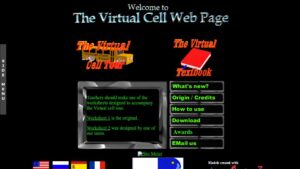
The Virtual Cell is not so dazzling as Cells Alive; the content, though, is extensive and interactive.

Students can compare the form and functions of various marine, mammalian brains at Manatee. Quite interesting.
BrainPOP is a commercial site but an especially engaging one–movies, experiments, etc. about blood, cells, hair. It is suitable for ages 6-14 but it does include sensitive topics … learn more
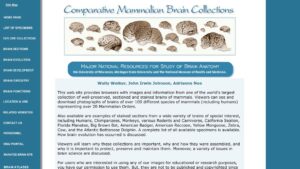
A huge collection of cross-sectional slides of the brain (more than 100 species) has been cataloged at the Brain Museum, co-sponsored by the University of Wisconsin, Michigan State, … learn more
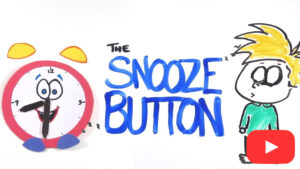
The snooze button – one of life’s luxuries. But is it really helping you out, or making you more tired? A entertaining look at the biology of sleep. … learn more

In this TED Ed video, Alexandra Horowitz illustrates how the dog’s nose can smell the past, the future and even things that can’t be seen at all. You … learn more
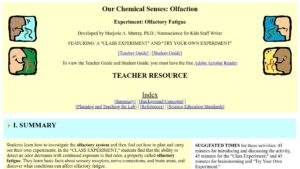
The neuroscience project at Washington University has developed a special study of the olfactory system. The site is graphically appealing and utilizes some new technology tools such as … learn more

What makes yawning so contagious? To get more oxygen? To cool the brain down?!?! Why are yawns contagious? Why do some groups yawn less? The Yawn-O-Meter video — … learn more
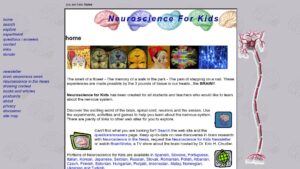
Neuroscience For Kids is so successful that several other sites link to it as the primary source on this topic. Explanations for the aroma of flowers and the … learn more
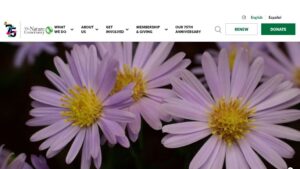
The post looks at the impact of invasive plant species and illustrates the adaptation of non-native vegetation in different ecological environments.
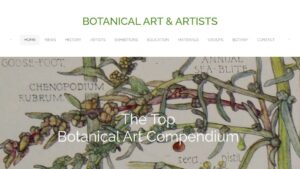
The images and drawings make Botany interesting to a wide range of students. This site provides in-depth resources and compendium of botanical art past and present for anyone … learn more

Plants communicate among themselves. This video shows the how and why. You’ll never look at a lawnmower the same way again.
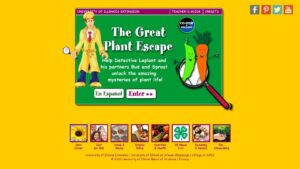
The Great Plant Escape, appropriate for very young children, is similar to LifeLab’s content. Presented as mysteries, a half-dozen experiments, like “Is it dust, dirt, dandruff or a … learn more